
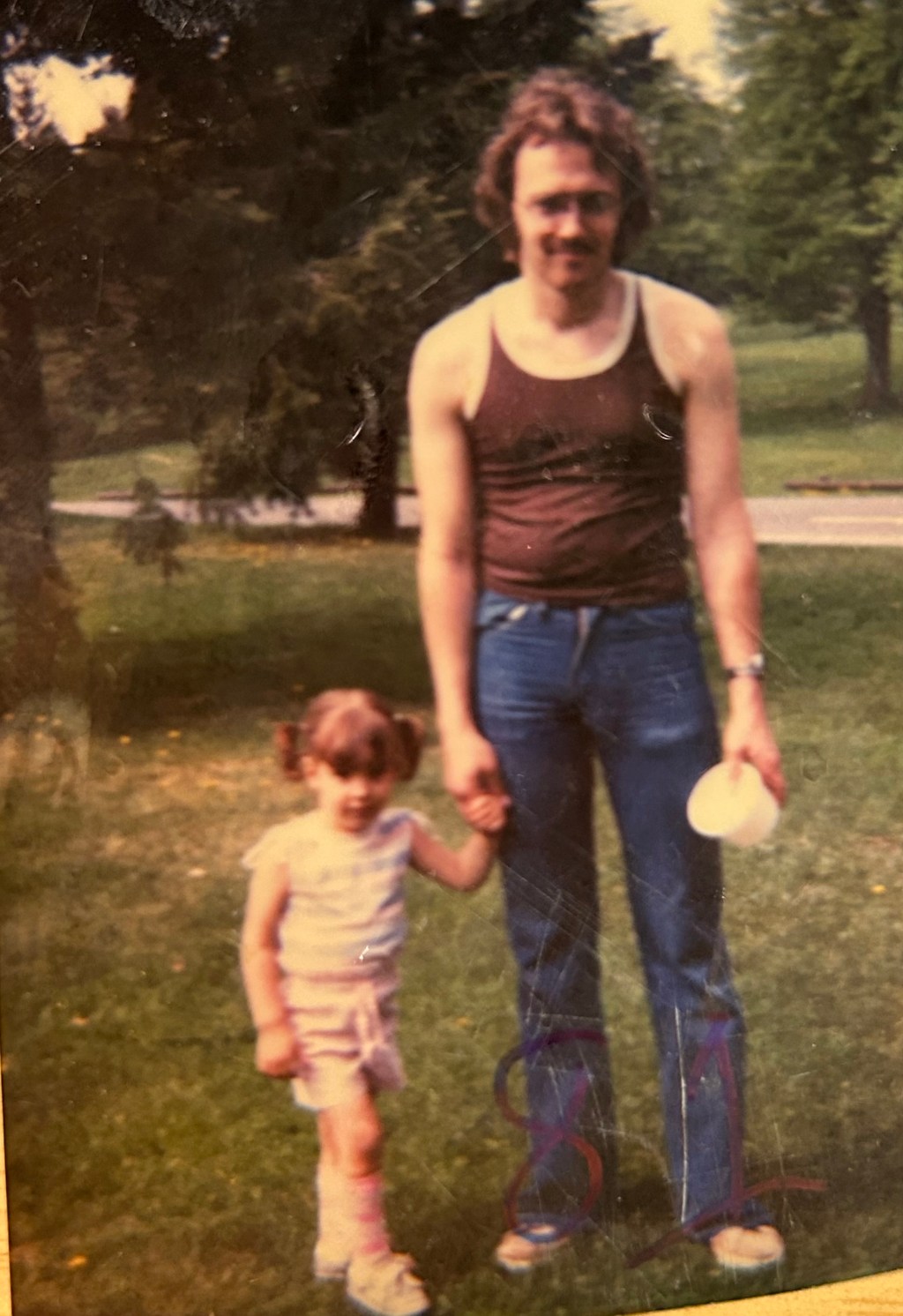
When I was a little girl, my father used to tell me, “I love you.” I would answer, “I love you too,” and without fail, he would reply, “I love you most.”
In the sea of painful memories I carry from my childhood, these small moments stand out like tiny life rafts. They help me step back from the trauma and remember that my father was a deeply broken man trying to figure out life the only way he knew how.
So to the one who may find themselves here – the one craving reassurance, the one who needs to know they are loved – hear this from me:
I love you most.
A couple of months ago, I looked at one of my clients – a man arrogant enough to double down in conflict rather than admit when he’s wrong….I told him the truth he desperately needed to hear:
“This is it. This is your moment.”
Instead of trying to win…
Instead of causing more damage to the people who still care about him…
Instead of clinging to pride…
I told him:
“Step back and look at what’s actually happening. This is the opportunity you’ve been waiting for.
You can finally get out of the abusive marriage you’ve been trapped in for the last twenty years.
Most people don’t get to have their cake and eat it too – but this situation has flashing neon signs all over it.
Not only do you get to walk away, you finally have the proof you need to take the lead in the divorce.
You can be redeemed and free in one vulnerable moment of truth.
But if you focus on winning this single argument, I promise you – you will lose the war.”
Then I told him the part that hit the hardest:
“You’re already in prison.
This is the moment someone is handing you the keys.
Don’t waste it.”
I’ve been doing the podcast circuit for the past couple of months and recently started getting invited to write articles too. The latest topic they asked me to write about?
Trauma bonds.
A painfully familiar theme in so many relationships today – and one I see constantly in long-term abusive marriages.
When a relationship has been toxic for ten, fifteen, twenty years or more, those trauma bonds run deep. They don’t break easily. They often require a catalyst – something undeniable – to finally snap the cycle.
And my client is staring his catalyst right in the face.
But will he recognize it?
Will he finally break free?
I honestly don’t know.
I hope so.
What I do know is this:
There is a massive lack of awareness, understanding, and open conversation around trauma bonds – especially for the people still stuck inside them. They think what they’re experiencing is “normal,” or “marriage,” or “just how things are.”
It’s not.
Trauma bonds masquerade as devotion, loyalty, or sacrifice, when in reality they are emotional traps that keep people tied to pain they were never meant to endure.
So here is my attempt – one of many – to start the conversation.
To shine a light into places people are scared to look.
To help us finally talk about what trauma bonds are doing to our connections, our relationships, and our hearts.
Because once you can see the trap,
you can choose something different.
And I promise you this:
Freedom is always worth choosing.
With all my Love, xoxo J
When Love Hurts: How to Break Trauma Bonds and Choose Connection That Heals
By Joni Woods
Love is meant to be one of God’s sweetest gifts – a place of safety, warmth, and belonging. But for so many people, our earliest experiences of “love” didn’t look anything like that at all. Instead of tenderness, we learned tension. Instead of steady affection, we learned inconsistency. Instead of being cherished, we learned to perform, to appease, to survive.
And when you learn love through fear or conditional approval, your heart doesn’t forget. It carries those lessons into adulthood, quietly shaping who you’re drawn to, what you tolerate, and the kind of relationships you believe you deserve.
In my book Burned, Blocked, and Better Than Ever, I share how my own understanding of love was formed in a childhood where affection was something you earned, trust was something you rationed, and vulnerability was something you hid. I didn’t know it then, but those experiences were laying the foundation for years of trauma bonds; emotional ties that felt like connection but were really captivity.
If you’ve ever stayed in a relationship that drained you…
If you’ve ever felt “addicted” to someone who hurt you…
If you’ve ever mistaken intensity for intimacy…
You’re not alone.
And you’re not broken.
You’re human! And these patterns can be unlearned.
Let’s gently walk through what trauma bonds are, how to spot emotional traps, and what it looks like to step into the kind of connection God actually designed for your heart.
Trauma Bonds: When Survival Looks Like Love
A trauma bond forms when love and fear become tangled together – usually long before we’re old enough to understand what’s happening. Maybe you grew up being told to “be good,” to keep the peace, to hide your tears, or to take responsibility for an adult’s emotions. Maybe affection came and went without warning. Maybe your home taught you that safety was something you earned.
In my own childhood, I learned early on that love had conditions. Approval depended on whether I passed the test, made the right choice, or kept silent. Pain wasn’t comforted; it was dismissed. Feelings weren’t welcomed; they were inconvenient. So I adapted. I worked harder. I stayed quiet. I took care of everyone but myself.
That’s what trauma does – it teaches you to survive, not to connect.
Emotional Traps: The Quiet Ways We Get Stuck
Trauma bonds rarely look dramatic. Most often, they slide into our lives quietly, through patterns we don’t even realize we learned.
Some emotional traps look like:
• Trying to earn love. Believing if you just give more, sacrifice more… you’ll finally feel chosen.
• Confusing intensity with intimacy. High highs and low lows feel like passion when in reality, they’re instability.
• Feeling responsible for someone else’s happiness. You become the emotional glue holding the relationship together.
• Minimizing your own needs. Your fear of “rocking the boat” is stronger than your desire to feel safe.
• Thinking your pain is the price of love. You tell yourself, “Everyone struggles… this is normal.”
These traps are powerful, not because we’re weak, but because they mirror the emotional rhythms we grew up with. They feel like home, even when they’re hurting us.
Why We Stay: The Hidden Glue of Trauma Bonds
People often wonder why women stay in relationships that clearly harm them. But trauma bonds aren’t logical; they’re neurological. They’re emotional.
Trauma bonds strengthen through:
• Intermittent affection. Just enough tenderness to keep you hoping for more.
• Mixed messages. “I love you” and “I hurt you” coming from the same person.
• Isolation. Pulling away from friends or keeping secrets to protect the relationship.
• Self-blame. Believing the chaos is somehow your fault.
• A longing for redemption. The hope that love can transform the pain if you just hold on.
When I was writing my book, I realized how deeply these patterns shaped my marriage and even my dating life afterward.
Trauma bonds don’t feel like chains.
They feel like “devotion”.
Until you learn what real love feels like.
The Moment Everything Shifts
For many women, the shift away from trauma bonding doesn’t happen in a single moment – it happens in a quiet awakening.
For me, it wasn’t anger that finally set me free. It was exhaustion. A deep, soul-worn tiredness that whispered, “You don’t have to live like this anymore.”
Maybe you’ve felt it too – that moment where the chaos stops feeling romantic and starts feeling heavy. Where you realize you’re constantly shrinking yourself just to keep the relationship alive. Where holding on hurts worse than letting go.
That moment is sacred.
It’s God nudging your heart toward freedom.
Healing begins when you no longer mistake intensity for connection – when you finally believe that love should make you feel safe, not small.
The LORD your God is with you; He is mighty to save. He will rejoice over you with gladness; He will quiet you with His love; He will rejoice over you with singing. Zephaniah 3:17
What True Connection Actually Looks Like
Stepping out of trauma bonds is only half the journey. The other half is learning what healthy love is supposed to feel like; something many of us never saw modeled.
True connection is:
Calm. Not chaotic. Not fear-based. A gentle steadiness.
Consistent. The same person on their good days and their hard days.
Safe. Your heart doesn’t have to hide.
Mutual. You’re not the only one doing the emotional labor.
Honest. No mixed signals. No silent punishments.
Kind. Not just in words – in tone, behavior, and presence.
At first, healthy love may feel unfamiliar, even boring. When you’ve lived with emotional turbulence, “peace” feels suspicious. But over time, your heart learns to trust safety. It learns to breathe again. It learns to receive!
Eventually, your nervous system stops craving chaos and starts craving connection and you give yourself permission to choose a love that doesn’t hurt!
The most beautiful truth is this:
You are allowed to choose a different kind of love than the one you were given.
You are allowed to unlearn the emotional traps that shaped you.
You are allowed to break the patterns that once held you captive.
You are allowed to walk toward relationships that bring peace, not turmoil.
And you are allowed to trust that God’s heart for you is gentler, kinder, and safer than any model of love you’ve ever known.
Your story is not defined by the trauma bonds you were born into – it’s defined by the healing you’re brave enough to walk toward.
And my friend, you are brave.
 Journey Work
Leave a comment