
I’ve never wanted to be an advocate.
Even writing that feels strange, considering where I am now- but it’s the truth.
I have always struggled to share my own thoughts. So the idea of being a voice for others- for entire groups of people, for stories that aren’t mine alone- has always felt like too much. Too heavy. Too sacred to get wrong.
I don’t know that I could ever fully honor what deserves to be honored.
So for a long time, my answer was simple:
No, thank you.
When Your Story Stops Being Yours
When I was publishing my book, I came face-to-face with that fear.
My first editor shifted my voice in a way that didn’t feel like me anymore. What started as my story– honest, personal, lived- was slowly reshaped into something else.
A role.
A title.
A “spokeswoman” for religious abuse.
And while that conversation matters- it deeply matters- you can’t force someone into that position. You can’t assign advocacy to someone who is still just trying to tell the truth of what they’ve lived through.
That kind of voice… has to be grown into.
Not edited into existence.
Learning to See What Isn’t Said
There’s something I don’t talk about often.
But it’s real.
I can recognize abuse almost immediately when I meet someone.
Not because they say it outright- but because of everything they don’t say.
It’s in the way they hold themselves.
The long pauses in conversation.
The moments where they know something is wrong- but they aren’t ready to name it yet.
And the pain… it’s there. Sometimes just beneath the surface, sometimes impossible to hide.
But here’s the part people don’t understand:
You can’t just tell someone they’re being abused.
It doesn’t work like that.
Instead, you sit with them.
You listen.
You hold space.
And you wait- as they begin to recognize it for themselves:
That what they’re experiencing isn’t love.
It isn’t support.
It isn’t encouragement.
It’s control.
It’s manipulation.
It’s possession.
The Instinct to Save Someone
This is the part I struggle with most.
Because once you see it- you really see it- every instinct in you wants to step in. To protect. To pull someone out before more damage is done.
To rescue them.
But here’s what I’ve learned, and it’s not a gentle lesson:
You cannot step in.
You cannot encourage enough.
You cannot support enough.
You cannot love someone into loving themselves.
And sometimes, the love you offer… gets used against you.
Twisted. Reframed. Manipulated.
Turned into another tool for the abuser.
That realization changes you.
Why This Work Matters
This is why On the Wings of Angels matters so much.
On average, it takes someone seven times to leave an abusive relationship for good.
Seven.
That number alone tells you how complex this is. How layered. How hard it is to untangle yourself from something designed to keep you small.
And when someone is finally ready to leave, they need more than encouragement.
They need real support.
Resources.
Safety.
A place to land.
That’s what this organization provides.
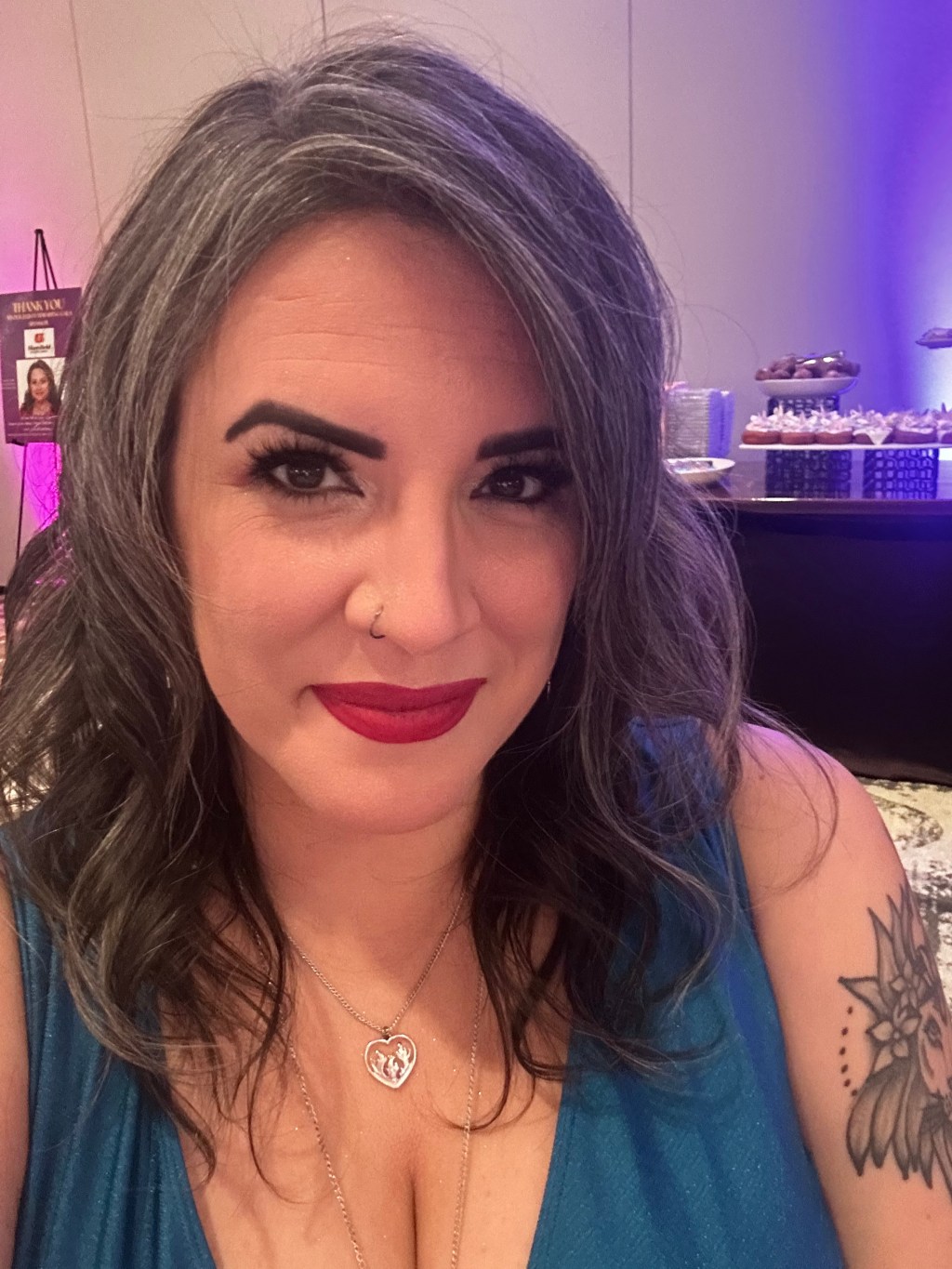
Being at the gala this past weekend- surrounded by over 300 people- was a reminder of how widespread this is. How many lives are quietly touched by domestic violence.
It’s not rare.
It’s just often unseen.
Finding My Voice (Without Forcing It)
Meeting JoJo changed something in me.
Not because she pushed me into a role- but because she didn’t.
She created space.
And in that space, I started to grow into my voice… slowly, honestly, in my own time.
Now, I’m learning to trust something I didn’t before:
That sharing my truth- without trying to carry everyone else’s- can still reach the people who need it.
Whether they’re:
- just starting to question things
- trying to leave
- or finally standing on the other side
If my words can offer even a moment of recognition or comfort, then they’ve done what they needed to do.
A Truth We Have to Be Willing to Hold
At the gala, JoJo’s husband, Paul, said something that stayed with me:
“Most perpetrators of domestic abuse are men. If we don’t own that truth, we can’t be part of the solution.”
There is truth in that.
And also- another truth exists alongside it.
I have seen domestic violence against men, too.
And what breaks my heart is the silence around it. The cultural pressure. The expectation to endure without speaking.
They deserve to be heard.
Because if we’re serious about addressing abuse, we have to be willing to see the full picture- not just the parts that are easier to talk about.
Maybe This Is What Advocacy Actually Looks Like
I still don’t think of myself as an advocate.
But I am someone who tells the truth.
Someone who has lived it.
Who can see it.
Who refuses to look away from it.
And maybe that’s what this really is.
Not a title.
Not a role.
Not something forced.
Just truth… shared honestly.
And trusted to find its way to the people who need it most.
With all of my love, xoxo J
If you are concerned about your relationship:
Below is some information from the United Nations – this also acts as a reminder that Domestic Violence is a global issue!
“What Is Domestic Abuse?
Domestic abuse, also called “domestic violence” or “intimate partner violence”, can be defined as a pattern of behavior in any relationship that is used to gain or maintain power and control over an intimate partner. Abuse is physical, sexual, emotional, economic or psychological actions or threats of actions that influence another person. This includes any behaviors that frighten, intimidate, terrorize, manipulate, hurt, humiliate, blame, injure, or wound someone. Domestic abuse can happen to anyone of any race, age, sexual orientation, religion, or gender. It can occur within a range of relationships including couples who are married, living together or dating. Domestic violence affects people of all socioeconomic backgrounds and education levels.
Anyone can be a victim of domestic violence, regardless of age, race, gender, sexual orientation, faith or class
Victims of domestic abuse may also include a child or other relative, or any other household member.
Domestic abuse is typically manifested as a pattern of abusive behavior toward an intimate partner in a dating or family relationship, where the abuser exerts power and control over the victim.
Domestic abuse can be mental, physical, economic or sexual in nature. Incidents are rarely isolated, and usually escalate in frequency and severity. Domestic abuse may culminate in serious physical injury or death.
Are You Being Abused?
Look over the following questions to think about how you are being treated and how you treat your partner.
Recognizing the signs of domestic abuse
Does your partner…
- Embarrass or make fun of you in front of your friends or family?
- Put down your accomplishments?
- Make you feel like you are unable to make decisions?
- Use intimidation or threats to gain compliance?
- Tell you that you are nothing without them?
- Treat you roughly—grab, push, pinch, shove or hit you?
- Call you several times a night or show up to make sure you are where you said you would be?
- Use drugs or alcohol as an excuse for saying hurtful things or abusing you?
- Blame you for how they feel or act?
- Pressure you sexually for things you aren’t ready for?
- Make you feel like there is “no way out” of the relationship?
- Prevent you from doing things you want – like spending time with friends or family?
- Try to keep you from leaving after a fight or leave you somewhere after a fight to “teach you a lesson”?
Do you…
- Sometimes feel scared of how your partner may behave?
- Constantly make excuses to other people for your partner’s behaviour?
- Believe that you can help your partner change if only you changed something about yourself?
- Try not to do anything that would cause conflict or make your partner angry?
- Always do what your partner wants you to do instead of what you want?
- Stay with your partner because you are afraid of what your partner would do if you broke up?
If any of these things are happening in your relationship, talk to someone. Without help, the abuse will continue. Making that first call to seek help is a courageous step.”
 Journey Work
Leave a comment